
Knowledge · Bulk Quote
O-Ring Chemical Compatibility: How to Read Resistance Before Buying
Learn how to screen O-ring chemical compatibility using the exact fluid, concentration, temperature, exposure time, pressure, movement, and compound-specific documentation.
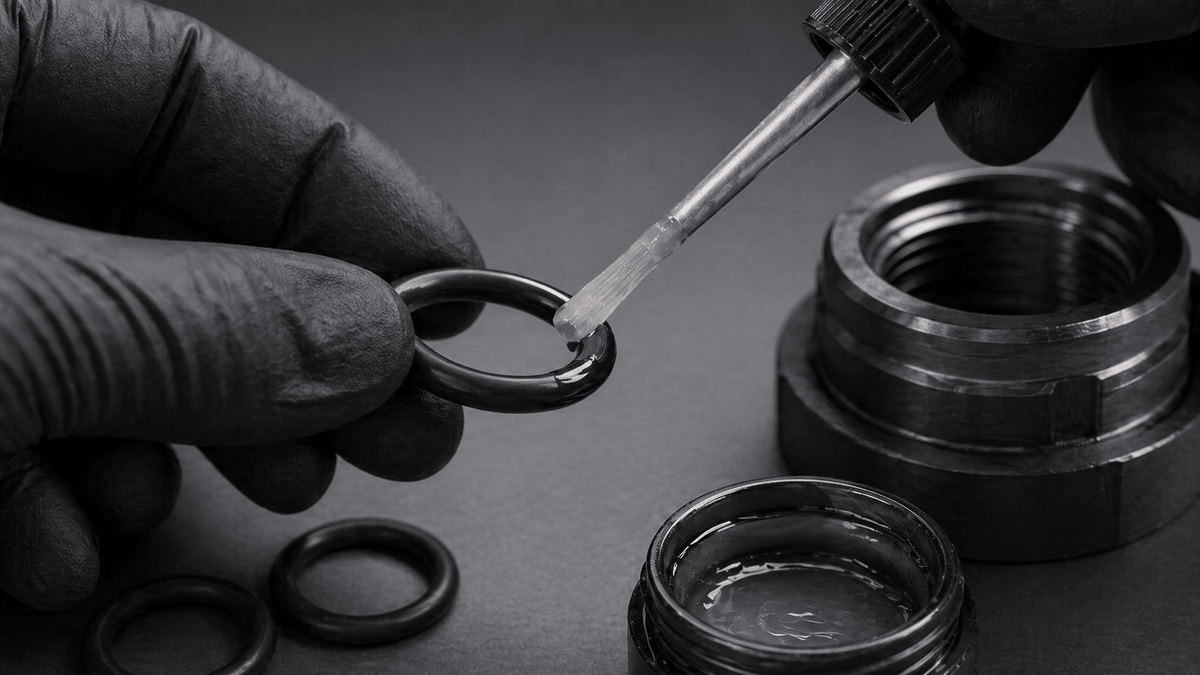
Chemical compatibility is a screening step, not a final product guarantee. An O-ring can match the required size and still fail if the exact compound is unsuitable for the fluid, concentration, temperature, exposure time, pressure, or movement.
Quick answer
Start with the exact fluid or chemical, then review concentration, minimum and maximum temperature, continuous or occasional exposure, pressure, cleaning cycles, and whether the seal is static or dynamic. A compatibility chart can narrow the options, but final selection should be confirmed against the exact compound and application.
Why compatibility matters
An unsuitable elastomer can swell, shrink, soften, harden, crack, become sticky, lose sealing force, or leak early. A seal that works during a short test may still fail after longer exposure or at a higher temperature.
If the existing seal failed, compare the symptoms with Why Is My O-Ring Leaking? before ordering another ring.
Information to collect
- Exact fluid or chemical name
- Concentration or mixture, if known
- Minimum and maximum temperature
- Continuous, intermittent, or cleaning-cycle exposure
- Pressure or vacuum
- Static, reciprocating, rotating, or other movement
- Required size, hardness, quantity, and documentation
Describing the equipment only as a pump, valve, pipe, or machine is usually not enough. The media and operating conditions are more useful for material screening.
Material families are starting points
- NBR: commonly considered for many petroleum oils, grease, and general mechanical sealing.
- FKM: commonly considered for many oils, fuels, elevated temperatures, and selected chemical environments.
- EPDM: commonly considered for water, weather, ozone, and selected aqueous service, but generally not petroleum oils or fuels.
- Silicone: often considered where low-temperature flexibility or wide-temperature elasticity matters, but it can have lower tear and abrasion resistance.
- FFKM: considered for demanding chemical or high-temperature service when the exact compound and documentation are reviewed.
These are material-family tendencies, not proof that every compound or product is suitable. Use the Material Guide and Chemical Compatibility page to narrow the options.
Temperature, time, and motion change the result
Heat can accelerate swelling, hardening, extraction, or chemical attack. Short contact can produce a different result from continuous immersion. Dynamic service adds friction, wear, and heat that a static compatibility rating may not cover.
For elevated-temperature screening, see High-Temperature O-Rings. For installation and lubricant checks, see Should You Lubricate an O-Ring?.
Choose the buying path
Direct purchase: use small-pack O-rings when the size, material, hardness, and application are already confirmed.
Application review or quotation: use Custom O-Ring Quote when the media or concentration is unclear, the service is demanding, a special compound or document is required, the size is unusual, or a drawing or sample needs review.
What to include in a request
- ID and cross section, or a drawing/sample
- Material and hardness, if known
- Fluid or chemical and concentration
- Temperature and pressure range
- Static or dynamic service
- Quantity and destination country
- Required certification or product-specific documentation
FAQ
Can I select an O-ring from a compatibility table alone?
No. Use the table to screen material families, then confirm the exact compound and operating conditions.
Is FKM always better than NBR?
No. The better choice depends on the fluid, temperature, pressure, movement, cost, and required documentation.
Is EPDM suitable for petroleum oil or fuel?
EPDM is generally not the first choice for petroleum oils or fuels. Confirm the exact media and compound before ordering.
What should I do when the chemical is unknown?
Do not guess. Identify the fluid from the equipment documentation or supplier, then submit the available details for review.
For how OXXRing prepares technical information and distinguishes general guidance from product-specific proof, read the Technical Information, Sources & Review Policy.


